The Physics of Membrane Failure: Understanding Wetting Out & Dynamic Pressure in Waterproof Textiles
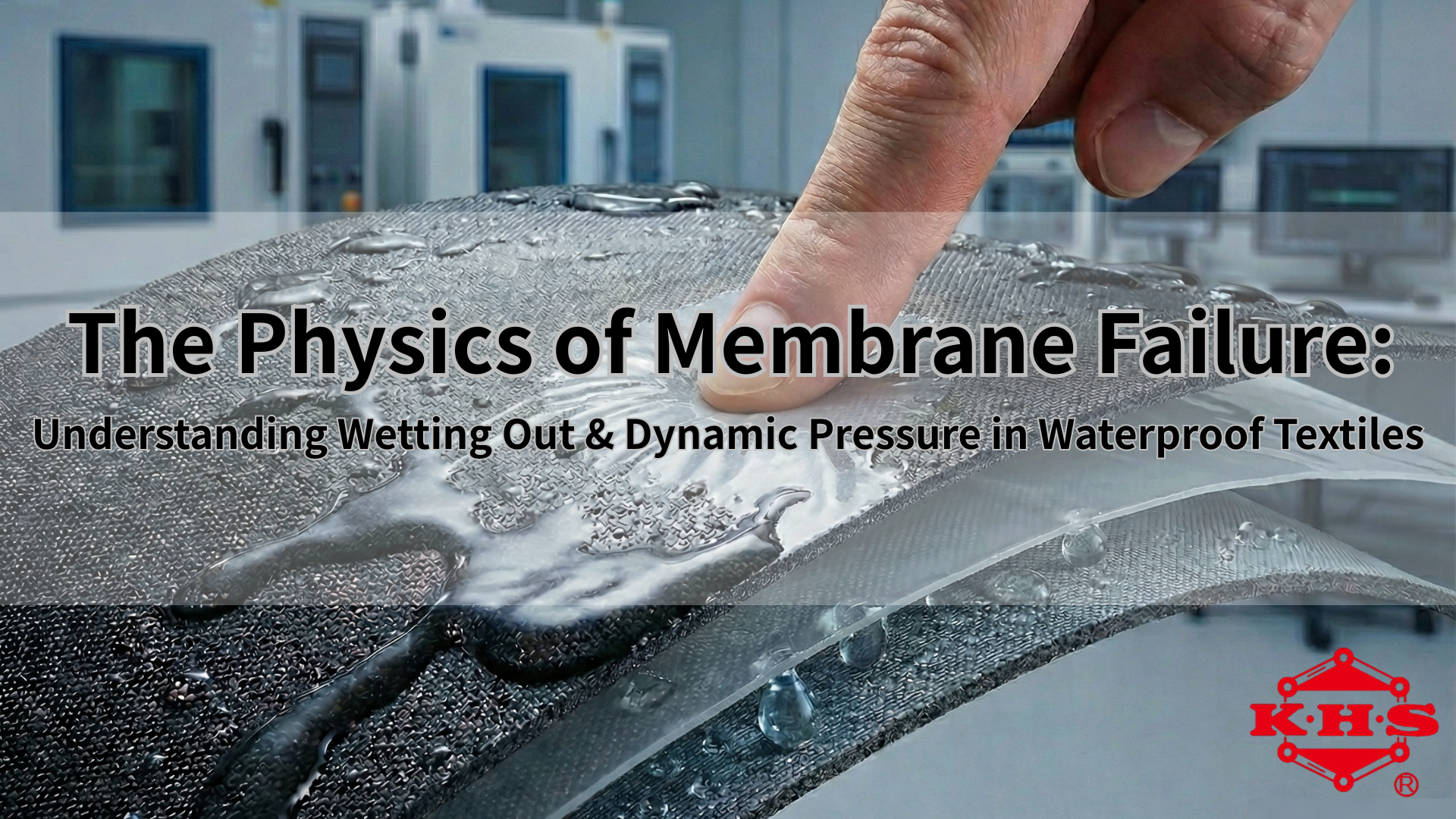
In the functional apparel and protective equipment industries, high-specification waterproof gear may occasionally leave the wearer feeling damp under extreme conditions, a phenomenon frequently misinterpreted as membrane leakage. In many cases, this is driven by the "Wetting Out" phenomenon—where a saturated face fabric reduces moisture vapor transmission efficiency—or by dynamic pressure spikes that approach or exceed the designed performance margins of the membrane during rigorous activities such as industrial kneeling or surgical leaning.
Understanding the physics behind these performance limitations is critical for B2B manufacturers and product engineers. By shifting the focus from static laboratory hydrostatic ratings to real-world dynamic environmental stressors, brands can engineer more reliable protective systems.
Kae Hwa Industrial addresses these high-pressure challenges through a tiered manufacturing strategy, utilizing precision casting and in-line lamination technologies to optimize both microporous and monolithic membrane constructions, maintaining structural consistency and barrier performance under demanding operational conditions.
The Physics of Membrane Failure: Why High-Spec Waterproof Gear Can Underperform Under Pressure
The "Wetting Out" Phenomenon: When Breathability Hits a Limit
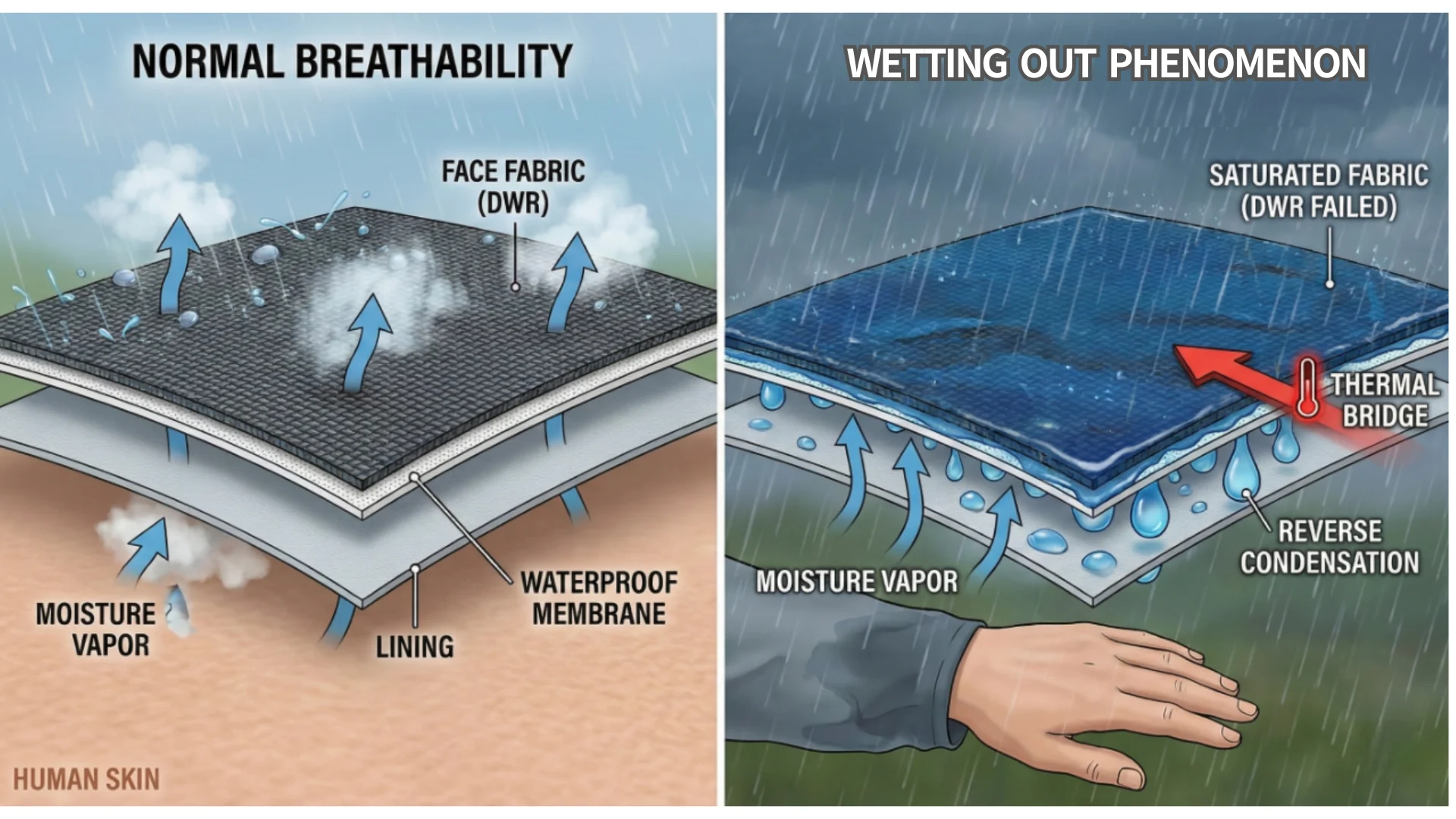
Many product developers encounter a common issue: garments that demonstrate strong Moisture Vapor Transmission Rates (MVTR) in laboratory testing may feel clammy during prolonged heavy rain. Subsequent inspection often confirms that the waterproof membrane remains structurally intact. This discrepancy reflects a key misunderstanding of breathability mechanics, specifically the "Wetting Out" phenomenon.
Standard breathable membranes rely on a vapor pressure differential between the internal microclimate and the external environment to drive moisture diffusion. This process requires an unobstructed diffusion path. When the Durable Water Repellent (DWR) coating on the face fabric degrades due to abrasion, contamination, or sustained rainfall, the outer textile layer can become saturated, forming a continuous liquid film.
- Impeded Breathability: This surface saturation increases vapor diffusion resistance, reducing effective moisture transport.
- Reverse Condensation: A saturated outer layer can increase heat transfer away from the body, lowering the membrane surface temperature. Under certain conditions, internal moisture vapor may condense before completing diffusion, producing a damp sensation that resembles leakage.
Dynamic Pressure: The Blind Spot of Static Lab Data
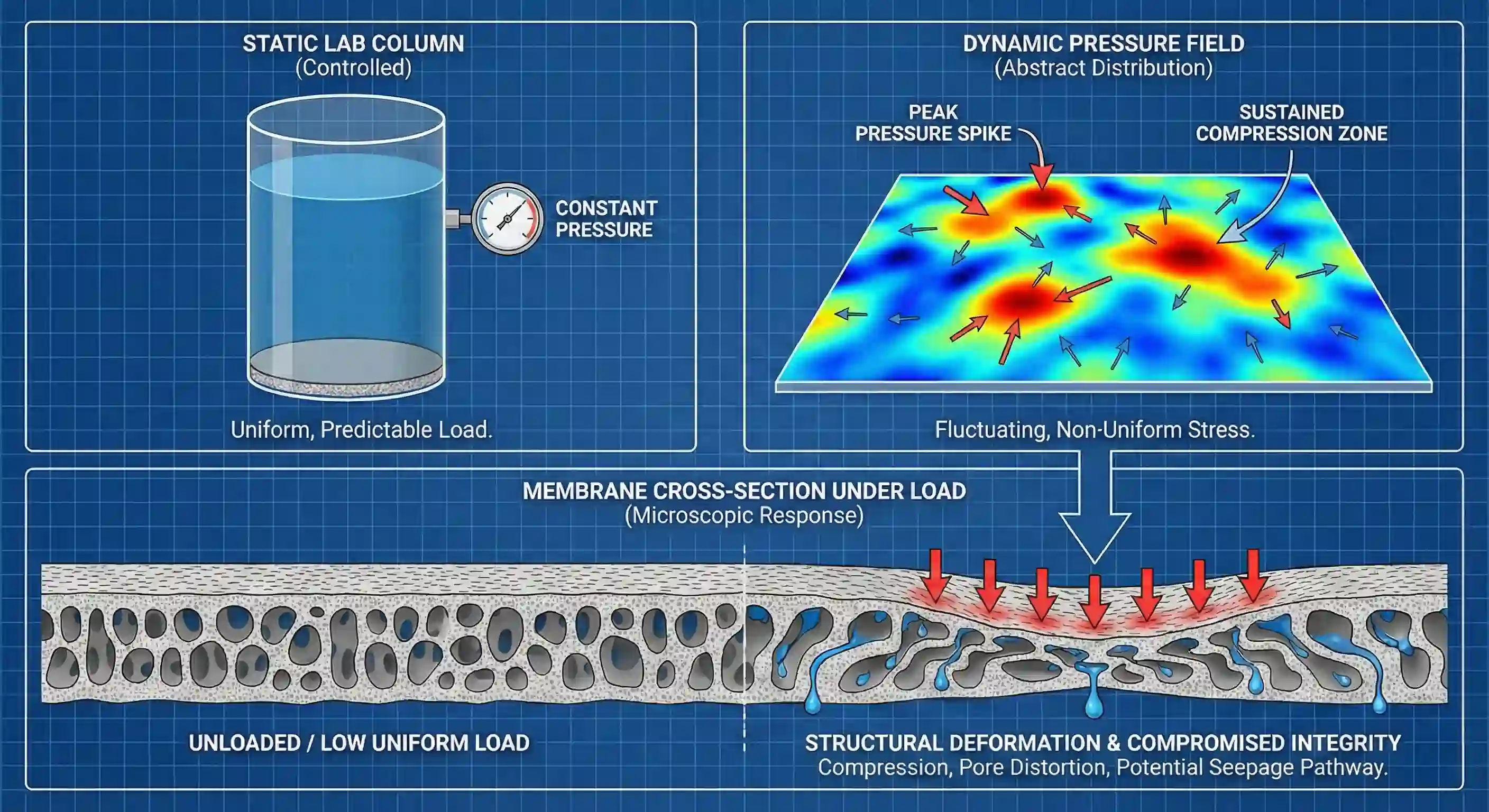
Technical datasheets frequently reference Hydrostatic Head ratings, often measured under controlled, static laboratory conditions. However, real-world performance is influenced by fluctuating dynamic pressures.
The Engineer's View: When Movement Alters Pressure Profiles
Liquid pressure exerted on a membrane is rarely constant. It varies with user movement and contact conditions, and in localized compression zones may approach or exceed standard laboratory test thresholds:
- Light Rain / Drizzle: Lower hydrostatic exposure under minimal load.
- Heavy Storm Conditions: Increased sustained hydrostatic stress.
- Industrial Kneeling / Crawling: Localized body weight applied over small surface areas can generate significantly elevated pressure.
- Surgical Applications: Sustained elbow compression against fluid-exposed surfaces introduces prolonged localized loading.
Under such scenarios, microporous membrane structures may experience reduced performance margins due to compression effects, structural deformation, or localized capillary pathways. Designing for extreme lightweight performance without accounting for compression loading can introduce structural reliability risks.
Engineering the Core: Structural Response Under Extreme Stress
To mitigate performance limitations under pressure, engineers must evaluate membrane architecture in relation to actual use-case loading conditions. Kae Hwa Industrial develops specialized film constructions tailored to specific environmental stresses:
- MicroBreath™ (Microporous Film): Utilizing a network of microscale pores, this structure supports high air and vapor transmission while resisting liquid penetration under typical environmental loads. Through controlled casting processes, Kae Hwa maintains tight dimensional tolerances and film uniformity, reducing localized structural inconsistencies. This architecture is widely applied in Type 5/6 industrial protection and hygiene-related applications where balanced breathability and barrier performance are required.
- Monolithic TPEE Films: In applications involving sustained or extreme compression, monolithic (non-porous) film structures offer an alternative diffusion mechanism based on hydrophilic molecular transport rather than physical pores. This architecture provides enhanced resistance to compression-induced seepage and is commonly specified for high-intensity environments such as alpine protective systems or AAMI Level 4 medical garments.
Rather than positioning one structure as universally superior, membrane selection should be aligned with the expected pressure profile and environmental stress conditions of the final product.
Manufacturing Insight: Verifying Dimensional Stability and Lamination Integrity
For medical, tactical, and high-performance protective applications, evaluating stability under pressure is often more relevant than baseline MVTR values alone.
Lamination Strength and RET Balance
A membrane’s functional performance depends on the integrity of the composite structure. Excessive adhesive loading during lamination may reduce vapor permeability and increase RET (Resistance to Evaporative Heat Transfer), while insufficient bonding can lead to structural instability under dynamic stress.
Kae Hwa utilizes advanced In-Line Lamination Technology, enabling immediate bonding following film formation. This integrated process supports consistent adhesion and structural uniformity while minimizing excessive adhesive application, helping preserve breathability and composite durability under demanding environmental exposure.
Compliance and Process Control
Applications such as surgical gowns may require validation under standards including ASTM F1671 or ISO 16604. Consistent barrier performance depends on process control from resin compounding through extrusion and lamination. By maintaining strict production monitoring and micro-scale dimensional consistency, Kae Hwa supports stable protective performance under high-stress conditions.
Membrane performance under pressure is determined not solely by static hydrostatic ratings, but by how structural design responds to real-world compression, surface saturation, and environmental variability.
Selecting the appropriate membrane architecture requires evaluating expected load conditions, environmental exposure, and composite structure design. By integrating controlled casting and lamination technologies, manufacturers can better manage performance margins under dynamic stress.
Ready to evaluate your product’s real-world pressure requirements?
Partner with a manufacturer that understands structural performance under load. Contact the Kae Hwa Technical Team to discuss material samples or consult with our engineers regarding membrane configurations suited to your application.
Evaluate Your Membrane Solutions Today
FAQ
Q1: Why does my high-spec waterproof jacket feel wet inside during heavy rain? Is the membrane leaking?
A1: In most cases, this is not a leak but the "Wetting Out" phenomenon. When the outer fabric's DWR (Durable Water Repellent) coating degrades, the fabric absorbs water and forms a continuous liquid film. This blocks the membrane's breathability, causing your own body heat and sweat to condense on the inside of the garment. Utilizing appropriate face fabrics and maintaining DWR treatments is essential.
Q2: Which membrane technology is better suited for high-pressure environments: Monolithic or Microporous?
A2: Monolithic (non-porous) films generally offer a superior structural advantage in high-pressure environments. Because they lack physical pores, they are highly resistant to seepage caused by dynamic pressure compression (e.g., kneeling, heavy backpacks), making them ideal for extreme outdoor sports or AAMI Level 4 medical gowns. Microporous films are better suited for scenarios where maximum airflow and heat dissipation are prioritized over extreme hydrostatic resistance.
Q3: Is a higher Hydrostatic Head rating always better for product development?
A3: Not necessarily. Over-engineering a fabric to achieve an unnecessarily high hydrostatic rating usually requires a thicker membrane or excessive adhesive layers, which can drastically reduce the Moisture Vapor Transmission Rate (MVTR) and flexibility. The engineering goal is to find the "Balance Point": a material that confidently withstands the maximum expected dynamic pressure of the specific use-case while retaining optimal breathability.
Q4: How does Kae Hwa prevent breathability loss during the lamination process?
A4: Kae Hwa utilizes proprietary In-Line Lamination Technology, which bonds the membrane to the substrate textile immediately after the casting extrusion process. This real-time, solvent-free bonding method significantly reduces the need for heavy adhesives, maximizing the retention of the film's original breathability and ensuring a softer, more durable composite material.